Modern Farmhouse Plans: Complete Guide to America’s Most Loved Home Style (2026)
Are you dreaming of wide front porches, shiplap walls, and that perfect blend of rustic charm with modern comfort? You’re…
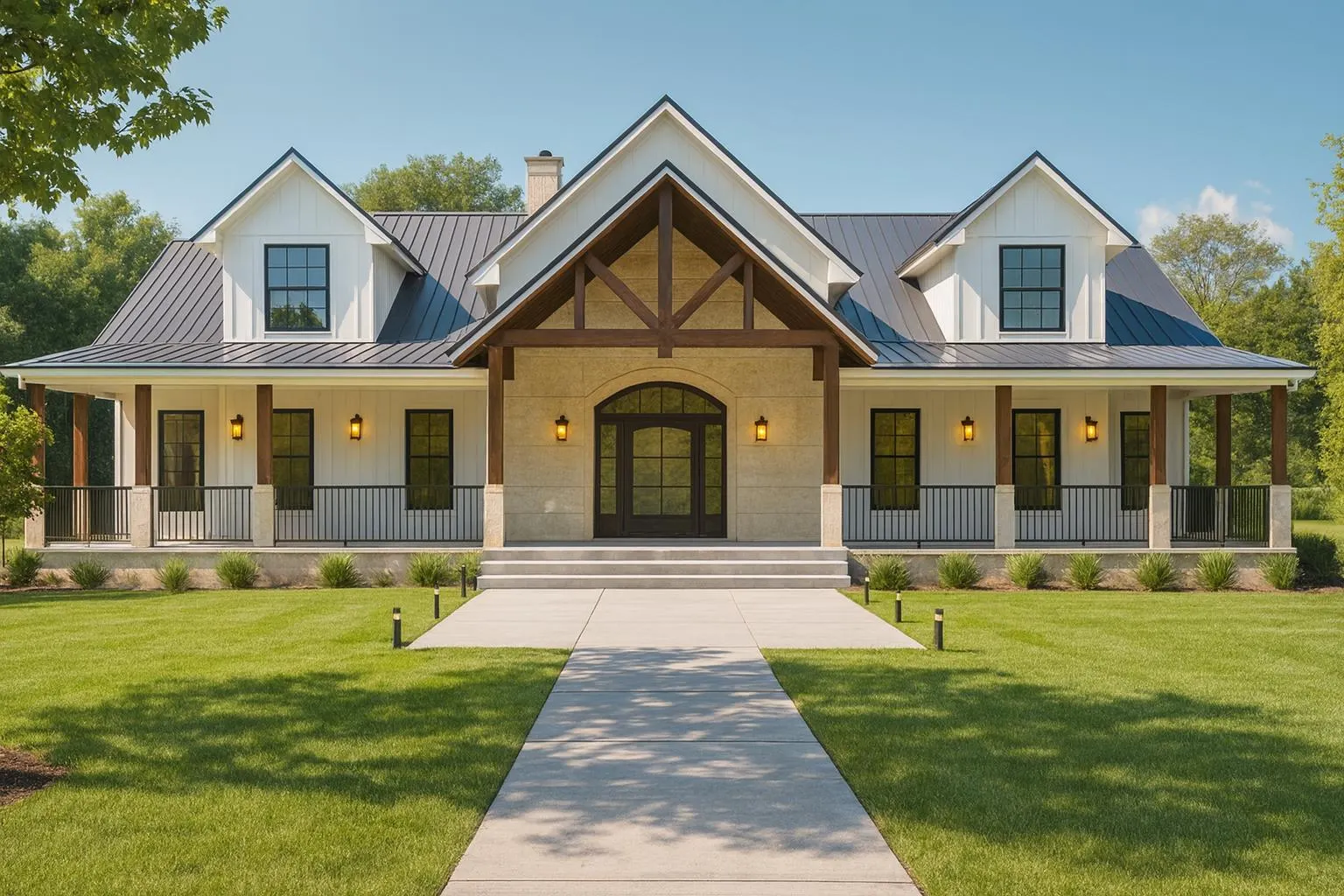
Are you dreaming of wide front porches, shiplap walls, and that perfect blend of rustic charm with modern comfort? You’re not alone. Modern farmhouse plans have dominated American residential architecture for over a decade, and they’re showing no signs of slowing down in 2025. Whether you’re building your first home, downsizing to a cozy retreat, or planning your forever family estate, modern farmhouse designs offer the timeless appeal and functional layouts that today’s homeowners crave. But with thousands of plans available, how do you choose the right one? This comprehensive guide breaks down everything you need to know about modern farmhouse plans from classic design elements to budget considerations, square footage options, and regional variations that make these homes uniquely American.
Key Takeaways: Modern Farmhouse Plans at a Glance
- Average Size: 1,800–2,800 sq ft (optimal for most families)
- Price Range: $180,000–$450,000 (depending on location and finishes)
- Signature Features: Board-and-batten siding, metal roofs, wraparound porches, open floor plans
- Best For: Growing families, empty nesters, hobby farmers, remote workers
- Regional Popularity: Highest demand in Texas, Tennessee, North Carolina, and the Midwest
- ROI Potential: 85–95% return on investment in suburban and rural markets
- Timeline: 8–14 months from groundbreaking to move-in (custom builds)
- Top Benefit: Timeless aesthetic that never feels dated plus highly functional layouts
What Defines a Modern Farmhouse Plan?
The Perfect Marriage of Old and New
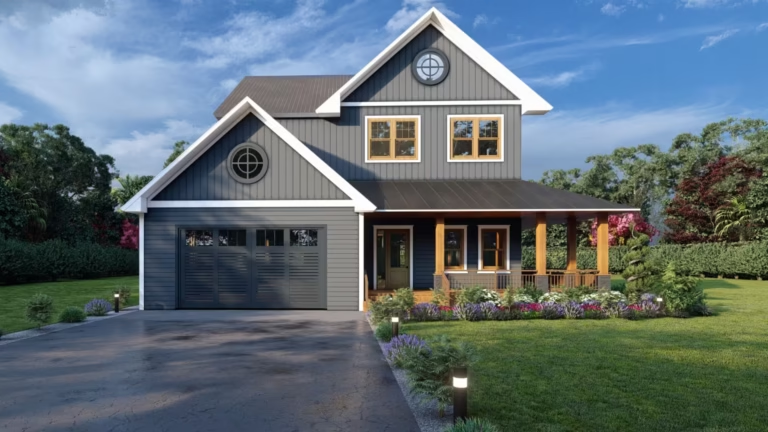
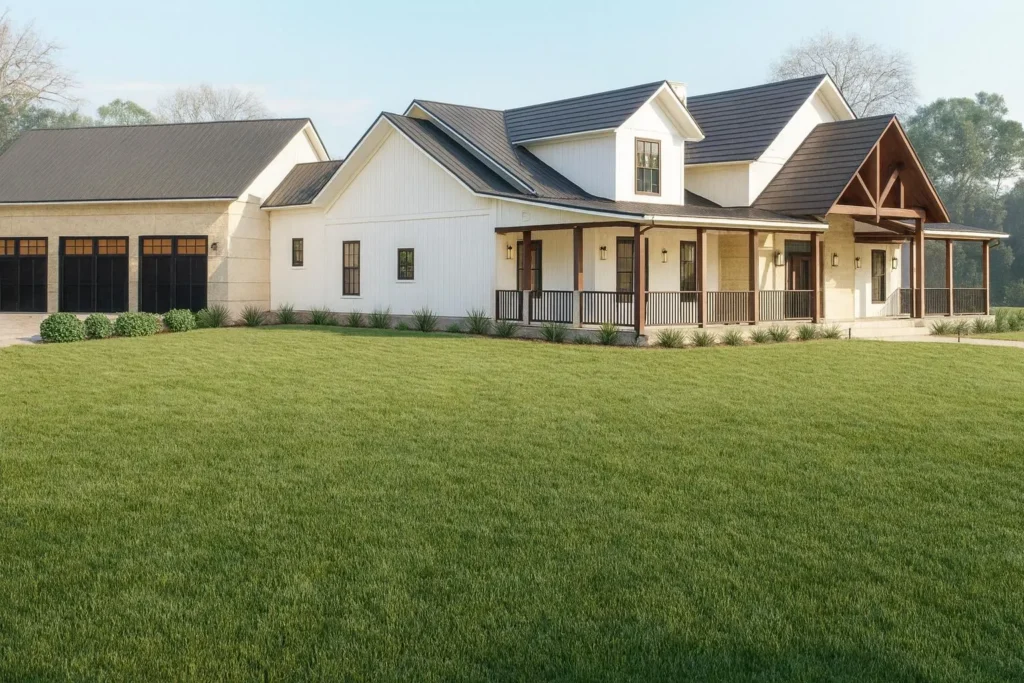
Modern farmhouse architecture isn’t just a trend it’s an evolution. These plans take the practical, honest simplicity of traditional American farmhouses and update them with contemporary amenities, open layouts, and energy efficient features. The result? Homes that feel both nostalgic and fresh, comfortable yet sophisticated.
Classic Farmhouse DNA:
- Pitched gable roofs with functional overhangs
- Symmetrical facades with central entries
- Durable, low-maintenance materials
- Connection between indoor and outdoor spaces
- Practical room layouts designed around daily life
Modern Updates:
- Open-concept living areas (kitchen, dining, living flow together)
- Oversized windows and abundant natural light
- Master suites on the main level (aging-in-place friendly)
- Mudrooms, pantries, and clever storage solutions
- Smart home integration and energy efficiency
Why Americans Can’t Get Enough
According to 2024 housing trend data, modern farmhouse plans consistently rank as the number one requested style among new home buyers. Here’s why:
- Versatility: Works in rural, suburban, and even urban settings
- Functionality: Layouts designed for real life, not just looks
- Curb Appeal: Instantly recognizable, universally appealing
- Customization: Easy to personalize without losing the core aesthetic
- Value Retention: Strong resale value across diverse markets
- Family-Friendly: Layouts that work for every life stage
- Instagram-Worthy: Let’s be honest—these homes photograph beautifully
Popular Modern Farmhouse Floor Plan Sizes
Small Modern Farmhouse Plans (1,200–1,800 sq ft)
Perfect for first-time buyers, empty nesters, or those embracing simpler living without sacrificing style.
Typical Layout:
- 2–3 bedrooms
- 2 bathrooms
- Open kitchen/living/dining area (600–800 sq ft)
- Front porch (150–250 sq ft)
- Optional: small rear deck or patio
Best Features:
- Lower construction and utility costs
- Easier maintenance and cleaning
- Efficient use of every square foot
- Ideal for narrow or smaller lots
- Faster build time (6–10 months)
Popular Configurations:
- 1,200 sq ft: 2-bed, 2-bath cottage style with loft option
- 1,500 sq ft: 3-bed, 2-bath with main-level master
- 1,800 sq ft: 3-bed, 2.5-bath with bonus room over garage
Cost Estimate: $150,000–$280,000 (varies by region and finishes)
Medium Modern Farmhouse Plans (1,800–2,500 sq ft)
The sweet spot for most American families. These plans offer room to grow without feeling overwhelming.
Typical Layout:
- 3–4 bedrooms
- 2.5–3 bathrooms
- Spacious great room (400–500 sq ft)
- Separate dining area
- Large kitchen with island (200–300 sq ft)
- Mudroom and/or walk-in pantry
- Front porch plus rear covered patio
Best Features:
- Separate spaces for living and entertaining
- Room for home offices or playrooms
- Multiple bathrooms reduce morning traffic jams
- Adequate storage throughout
- Accommodates growing families comfortably
Popular Configurations:
- 2,000 sq ft: 3-bed, 2.5-bath with home office nook
- 2,200 sq ft: 4-bed, 2.5-bath with upstairs bonus room
- 2,500 sq ft: 4-bed, 3-bath with main-level guest suite
Cost Estimate: $250,000–$425,000 (depends on location and customization)
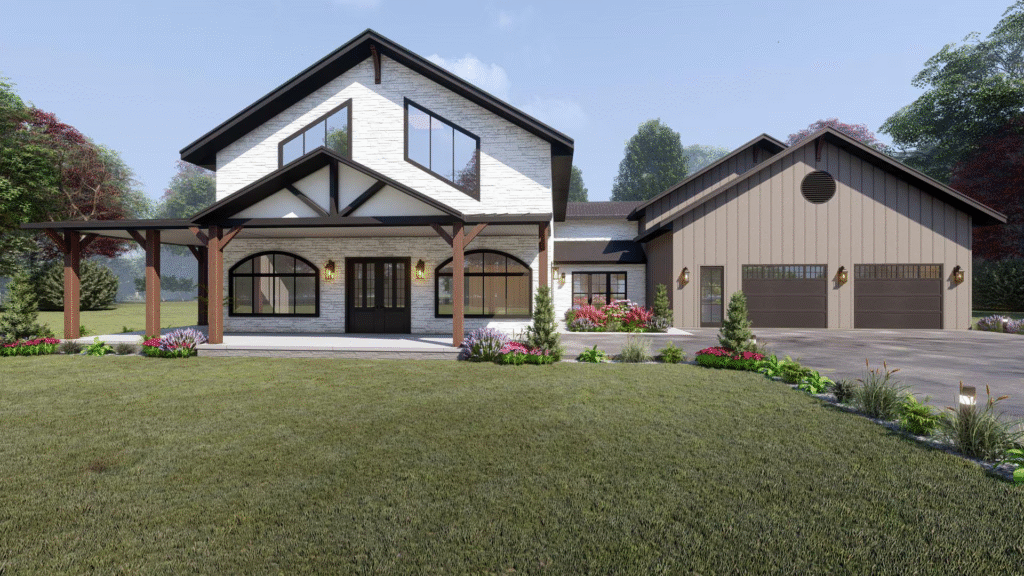
Large Modern Farmhouse Plans (2,500–4,000+ sq ft)
Luxury farmhouse living with room for everyone and everything.
Typical Layout:
- 4–6 bedrooms
- 3.5–5 bathrooms
- Expansive open living areas (800–1,200 sq ft)
- Formal dining room
- Chef’s kitchen with walk-in pantry and prep kitchen
- Multiple living areas (keeping room, game room, media room)
- Mudroom with built-in lockers
- Main-level master plus guest suite
- Wraparound or multi-level porches
- 3-car garage
Best Features:
- Multi-generational living capability
- Designated spaces for work, play, and relaxation
- High-end finishes and architectural details
- Room for entertaining large groups
- Luxury amenities (spa bathrooms, wine cellars, craft rooms)
Popular Configurations:
- 3,000 sq ft: 4-bed, 3.5-bath with bonus room and covered lanai
- 3,500 sq ft: 5-bed, 4-bath with separate guest wing
- 4,000+ sq ft: 5-bed, 4.5-bath with finished basement and pool house potential
Cost Estimate: $425,000–$800,000+ (luxury finishes can push higher)
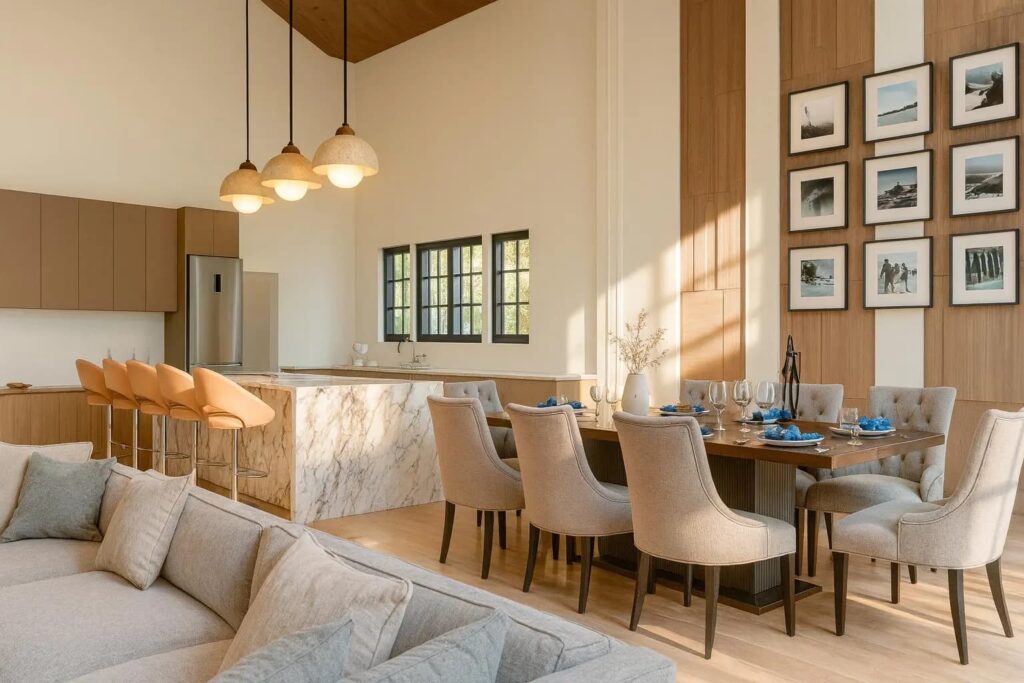
Exterior Design Elements: The Modern Farmhouse Look
Siding & Materials
Board-and-Batten Siding (Most Popular)
Wide vertical boards with narrow battens covering the seams create classic farmhouse texture. Typically painted white, black, or soft gray.
- Pros: Visually striking, hides imperfections, traditional appeal
- Cons: More labor-intensive installation, slightly higher cost
- Cost: $4–$8 per sq ft installed
Horizontal Lap Siding
Traditional clapboard or fiber cement siding in 6–8 inch exposure.
- Pros: Classic look, easier installation, widely available
- Cons: Can feel generic without accent materials
- Cost: $3–$6 per sq ft installed
Mixed Material Approach (Trending in 2025)
Combining board-and-batten with stone, brick, or wood accents.
- Example: White board-and-batten upper level plus natural stone lower level
- Creates visual interest and depth
- Cost varies based on material choices
Roofing
Metal Roofs (Signature Modern Farmhouse)
Standing seam metal roofing in charcoal, black, or weathered gray.
- Pros: 40–70 year lifespan, energy-efficient, low maintenance, classic farmhouse appeal
- Cons: Higher upfront cost, can be noisy in heavy rain (solved with proper insulation)
- Cost: $8–$14 per sq ft installed
Architectural Shingles
High-quality asphalt shingles in dimensional patterns.
- Pros: More affordable, proven performance, easier repairs
- Cons: Shorter lifespan (20–30 years), less distinctive
- Cost: $4–$7 per sq ft installed
Roof Design Elements:
- Steep Pitches: 8:12 to 12:12 slopes create dramatic lines
- Gable Ends: Multiple gables add architectural interest
- Dormers: Functional and decorative, they increase upper-level space
- Overhangs: 18–36 inch eaves provide weather protection and shadow lines
Windows & Doors
Window Styles:
- Black Frame Windows: The modern farmhouse signature (aluminum-clad or vinyl)
- Grid Patterns: 6-over-6, 9-over-9, or farmhouse-style grids
- Sizes: Oversized windows (4×6 ft or larger) maximize natural light
- Placement: Symmetrical on front facade, abundant on rear elevation
Front Doors:
- Styles: Craftsman 5-panel, modern flush doors, or rustic plank doors
- Colors: Black, navy, forest green, or natural wood tones
- Hardware: Matte black or oil-rubbed bronze
- Sidelights: Glass sidelights and transom windows add elegance
French Doors & Sliders:
Large openings (8–16 ft wide) connecting indoor living spaces to porches and patios.
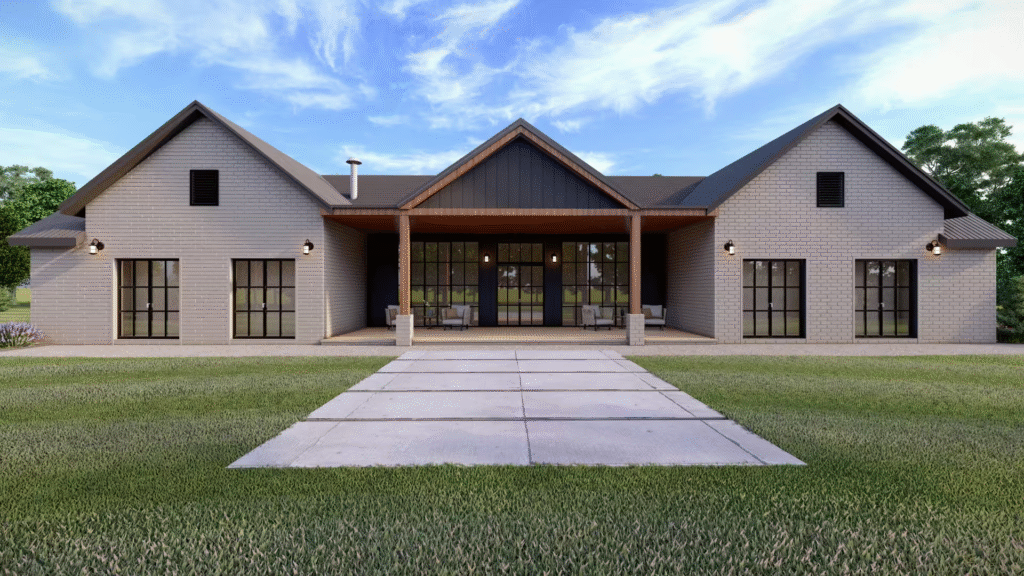
Porches: The Heart of Farmhouse Living
Front Porches:
- Depth: Minimum 8 feet (ideal: 10–12 feet for furniture)
- Width: Full-width or partial (minimum 20 feet)
- Columns: Tapered square columns or simple round posts
- Railings: Simple horizontal rails or classic balusters
- Ceiling: Tongue-and-groove wood or beadboard, painted white or light blue
Wraparound Porches:
Extend along side elevation, adding 400–800 sq ft of outdoor living space.
- Perfect for corner lots
- Creates multiple outdoor “rooms”
- Higher construction cost but massive ROI in lifestyle and resale value
Rear Covered Patios:
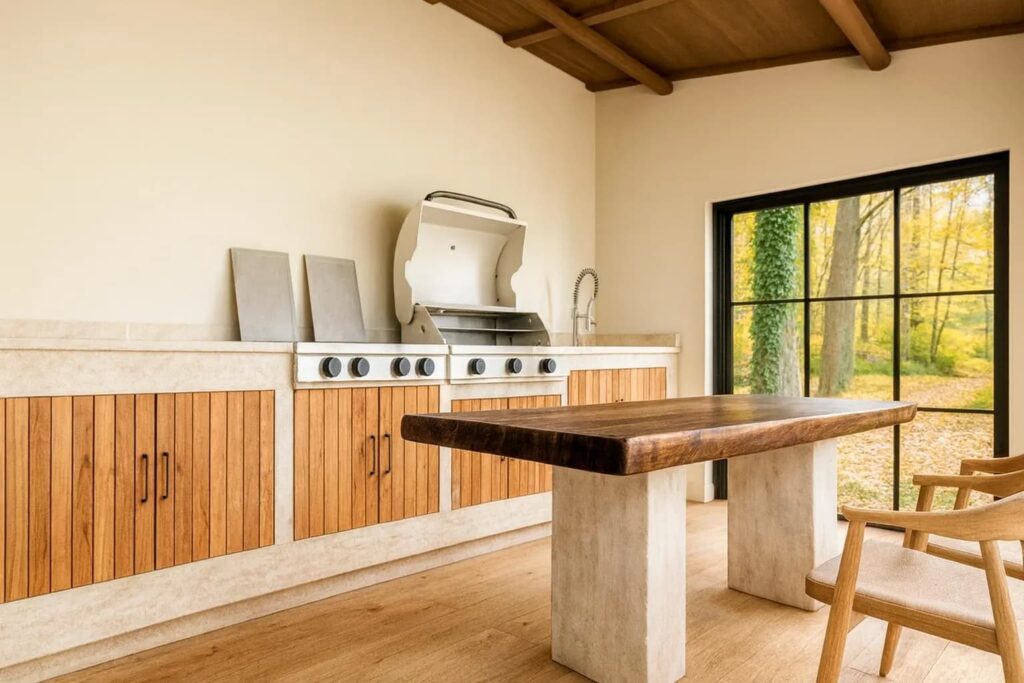
10–16 ft deep, accessible from kitchen/living area, often includes outdoor kitchen prep area.
Color Palettes
Exterior Combinations That Work:
- Classic White Farmhouse
- Body: White or soft white
- Trim: Same or bright white
- Roof: Black or charcoal metal
- Accents: Black windows, natural wood door
- Modern Contrast
- Body: Black or charcoal board-and-batten
- Trim: White
- Roof: Black metal
- Accents: Natural wood or stone
- Warm & Inviting
- Body: Warm gray or greige
- Trim: White
- Roof: Weathered gray metal
- Accents: Natural wood, warm metal fixtures
- Regional Farmhouse
- Body: Natural wood siding or stone
- Trim: White or cream
- Roof: Natural metal or dark shingles
- Accents: Black windows, rustic doors
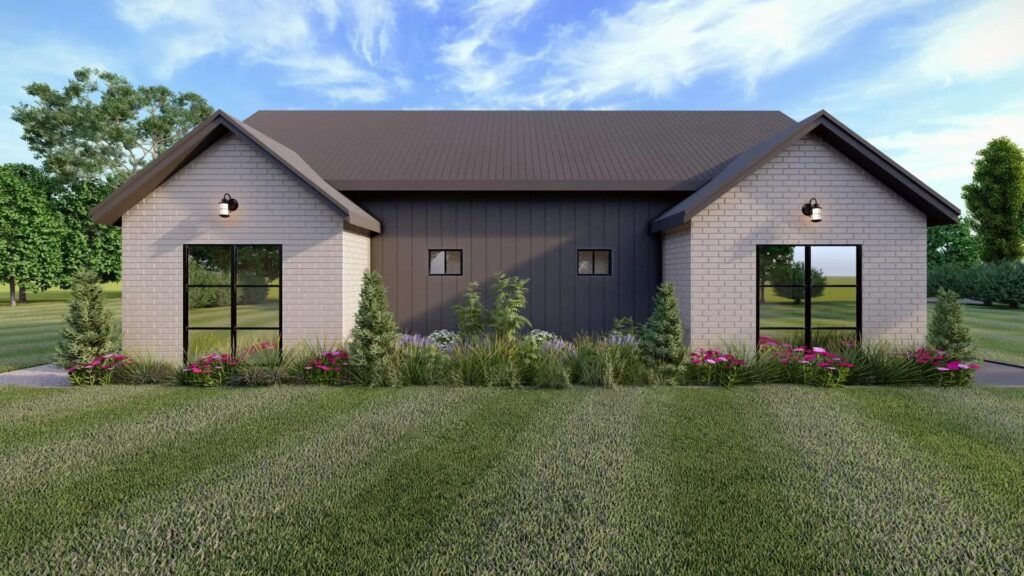
Interior Layout: How Modern Farmhouse Plans Live
Open Concept Living Spaces
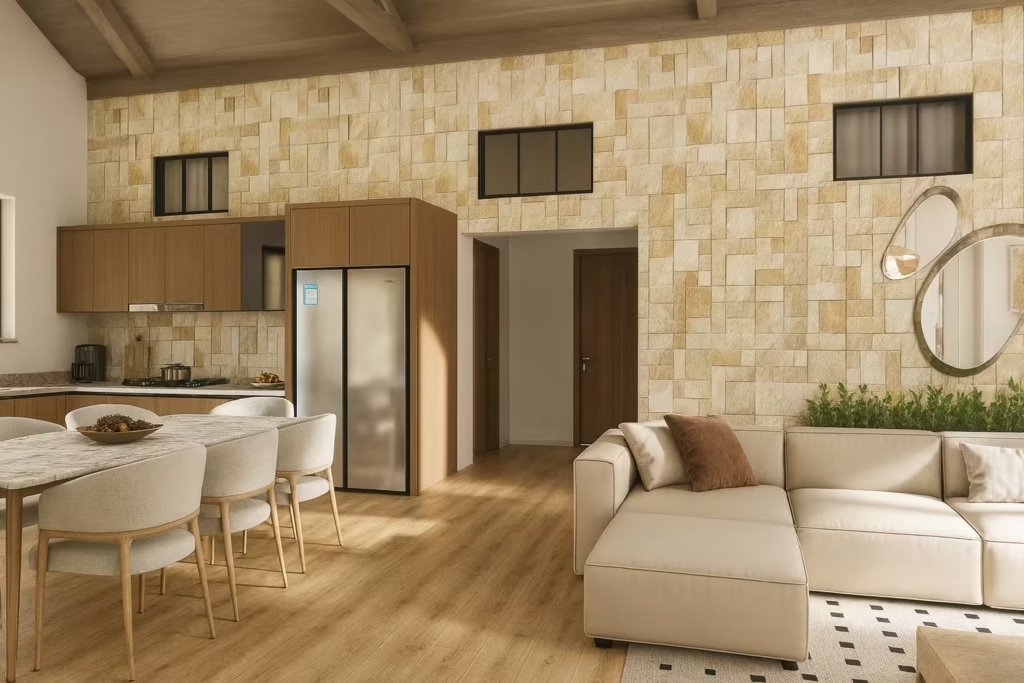
The cornerstone of modern farmhouse design is the flowing, open floor plan that connects cooking, dining, and living.
Kitchen/Dining/Living Integration (800–1,200 sq ft combined):
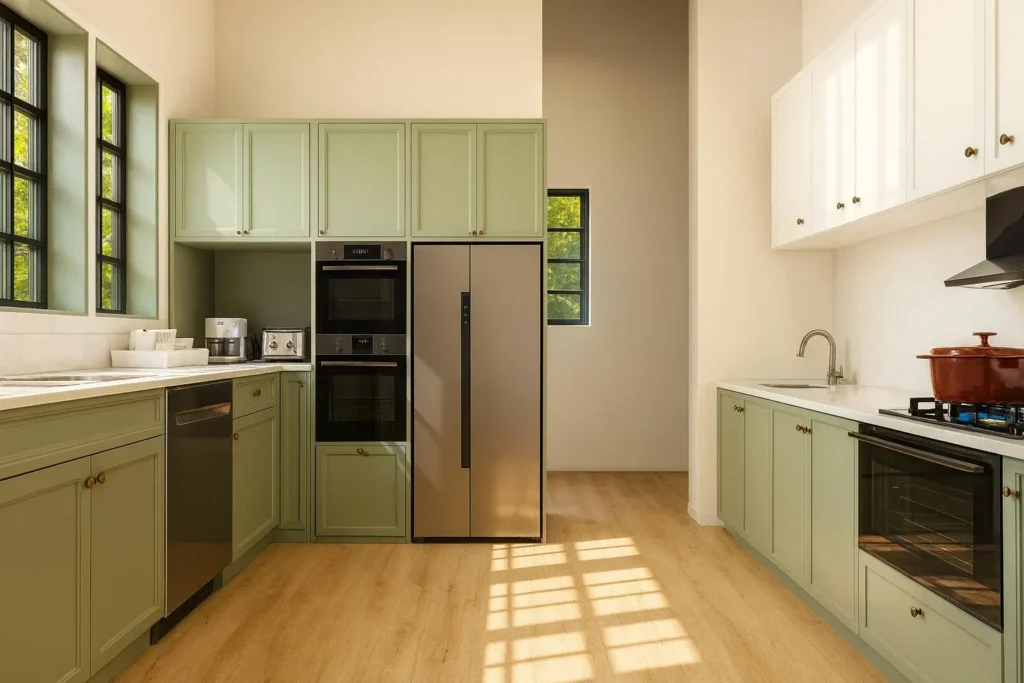
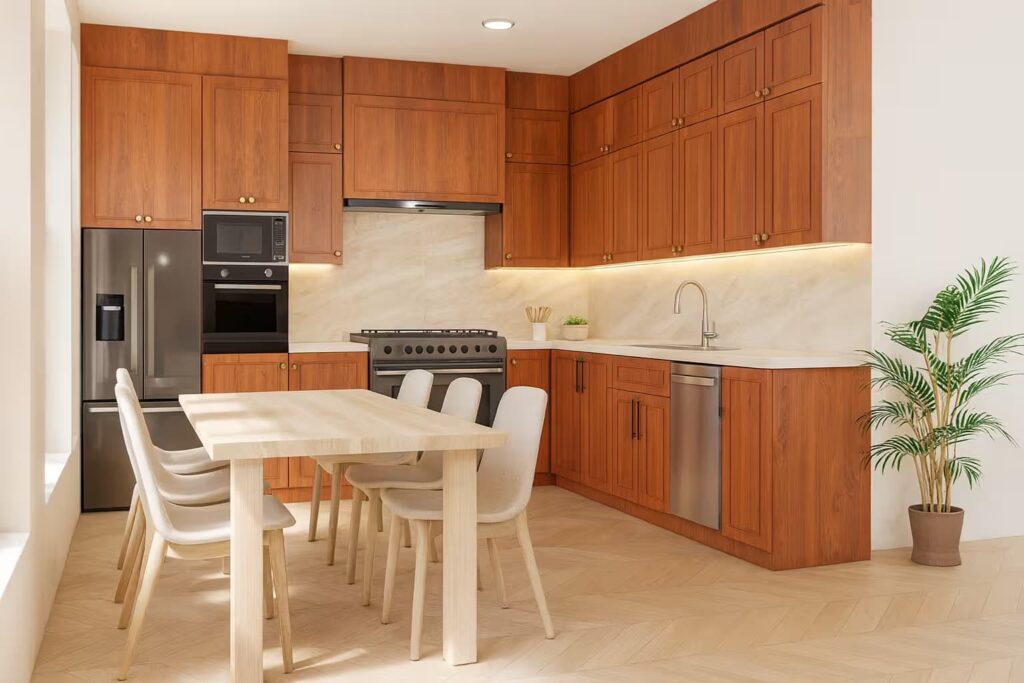
Kitchen Features:
- Island: 8–12 ft long, seating for 4–6
- Layout: L-shape or U-shape with island
- Pantry: Walk-in pantry (6×6 ft minimum) or butler’s pantry
- Appliances: Professional-style range, farmhouse sink, integrated fridge
- Cabinetry: Shaker-style in white, gray, or two-tone (wood lowers, painted uppers)
- Countertops: Quartz, granite, or butcher block
- Backsplash: Subway tile, shiplap, or natural stone
Dining Area:
- Open to kitchen, accommodates 6–10 person table
- Large windows or patio access
- Shiplap accent wall or board-and-batten wainscoting
- Statement lighting (modern farmhouse chandelier or lanterns)
Living Room:
- Size: 16×18 ft to 20×24 ft
- Focal Point: Fireplace with shiplap or stone surround
- Ceiling: Vaulted or coffered ceilings (10–14 ft height)
- Beams: Exposed wood beams (real or faux) add character
- Flooring: Wide-plank hardwood, LVP, or polished concrete
Master Suite: Main-Level Luxury
Modern farmhouse plans prioritize main-level master suites for aging-in-place and convenience.
Bedroom (14×16 ft minimum):
- Tray or vaulted ceiling
- Direct porch or patio access (ideal)
- Walk-in closet (8×8 ft minimum, 10×12 ft preferred)
- Natural light from multiple windows
Master Bathroom (10×12 ft to 14×16 ft):
- Dual Vanity: 6–8 ft long with separate sinks
- Shower: Walk-in, 4×6 ft minimum, curbless entry, tile surround
- Tub: Freestanding soaking tub (trending) or garden tub
- Toilet: Separate water closet for privacy
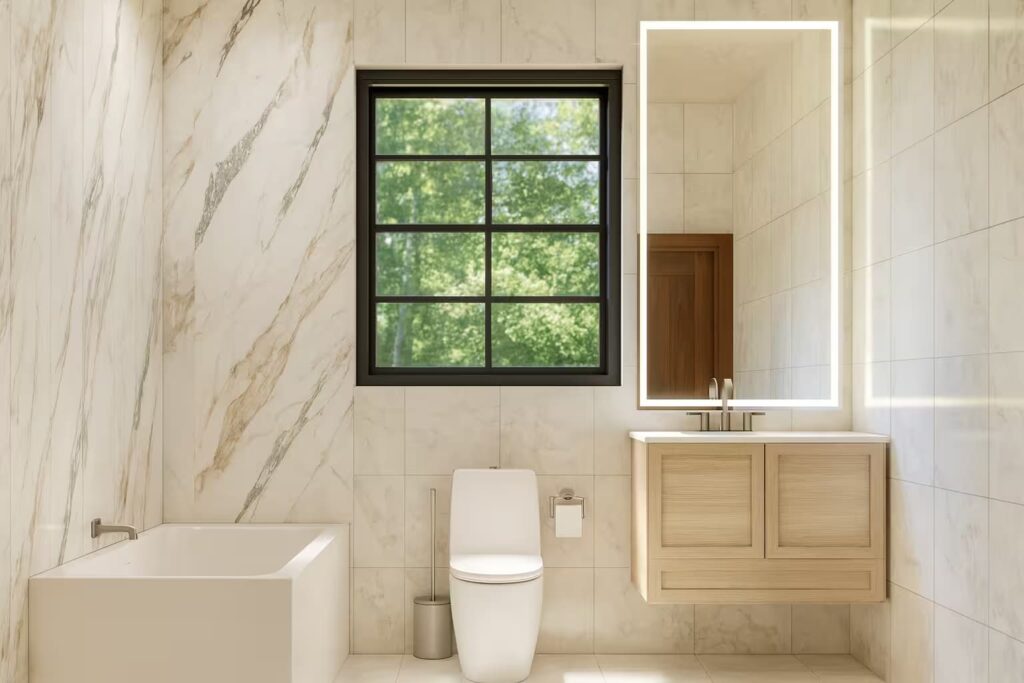
- Finishes: Marble or marble-look tile, matte black fixtures, shiplap walls
Additional Bedrooms
Secondary Bedrooms (11×12 ft to 13×14 ft):
- Adequate closet space (4–6 ft wide)
- Located upstairs or in separate wing for privacy
- Shared bathroom or Jack-and-Jill configuration
Guest Suite (Optional):
Main-level bedroom with adjacent full bath, perfect for guests or elderly parents.
Functional Spaces That Make Life Easier
Mudroom (8×10 ft minimum):
- Built-in bench with storage below
- Coat hooks or lockers (one per family member)
- Cubbies for shoes and bags
- Access from garage to kitchen
- Tile or luxury vinyl flooring (easy to clean)
Laundry Room (8×8 ft minimum):
- Main-level location (ideally near mudroom)
- Upper and lower cabinets for storage
- Folding counter above machines
- Utility sink
- Room for sorting and hanging clothes
Home Office/Flex Space (10×12 ft):
Essential in 2025 for remote work and homeschooling.
- French doors or barn doors for privacy
- Built-in shelving and desk
- Natural light
- Located off main living area
Bonus Room (300–500 sq ft):
- Upstairs or above garage
- Media room, playroom, craft room, or second living area
- Separate HVAC zone for comfort
Storage Solutions
Modern farmhouse plans excel at integrated storage:
- Walk-in pantries (6×6 ft to 8×10 ft)
- Under-stair storage
- Built-in mudroom lockers
- Linen closets on every bedroom level
- Oversized garage with shelving and workbench space
Space-Saving & Smart Design Solutions
Maximizing Square Footage
Even in smaller modern farmhouse plans, smart design creates the feeling of spaciousness.
Vaulted Ceilings:
In living areas and master bedrooms, vaulted ceilings (12–16 ft at peak) make rooms feel twice their size.
Open Sightlines:
Minimize walls and hallways. Direct views from entry through to rear patio create depth.
Strategic Window Placement:
Large windows on rear elevation, transom windows above doors, corner windows—all bring in light and expand visual space.
Built-In Furniture:
Window seats, banquettes, and built-in shelving save floor space while adding character.
Pocket Doors & Barn Doors:
Save swing space in bathrooms, pantries, and home offices.
Multi-Functional Rooms
Kitchen Island as Command Center:
Not just for meal prep—it’s homework station, coffee bar, serving buffet, and gathering spot.
Dining Room Flexibility:
With open layout, dining space serves as overflow seating, craft area, or work-from-home zone.
Flex Rooms:
Plan for a room that can transition: nursery to playroom to teen hangout to guest room to home gym.
Covered Porches as Extra Living:
With ceiling fans, lighting, and comfortable furniture, porches function as additional living rooms 6–9 months of the year in most climates.
Future-Proofing Your Plan
Aging-in-Place Features:
- Main-level master suite (no stairs required for daily living)
- Curbless master shower
- 36-inch doorways (wheelchair accessible)
- Blocking in walls for future grab bars
- Single-story or elevator-ready designs
Expandability:
- Unfinished bonus room or basement (finish as needed)
- Plumbing stubbed for future bathroom additions
- Electrical panel with capacity for additions
- Attic trusses for future storage or living space
Cost Considerations: What You’ll Really Pay
Construction Cost Breakdown
National Averages (2025):
- Basic Build: $100–$150 per sq ft
- Mid-Range Build: $150–$225 per sq ft
- High-End Build: $225–$350+ per sq ft
For a 2,200 sq ft Modern Farmhouse:
- Basic: $220,000–$330,000
- Mid-Range: $330,000–$495,000
- High-End: $495,000–$770,000
What Drives Costs Up?
Site-Related:
- Sloped lots requiring grading or retaining walls
- Well and septic system (add $15,000–$40,000)
- Long driveways or site access challenges
- Tree clearing and land preparation
Design Complexity:
- Complex roof lines (multiple gables, dormers, valleys)
- Stone or brick veneer (add $8–$15 per sq ft)
- Wraparound porches (add $15,000–$50,000)
- Custom windows and doors
- Vaulted ceilings and exposed beams
Interior Finishes:
- Hardwood flooring vs. LVP (difference: $5–$10 per sq ft)
- Quartz vs. granite countertops
- Custom cabinetry vs. semi-custom
- Tile work in multiple bathrooms
- High-end appliances and fixtures
Money-Saving Strategies (Without Sacrificing Style)
Design Phase:
- Simplify the Roofline: Fewer roof planes equals lower framing and roofing costs
- Rectangular Footprint: Square or rectangular homes cost less per sq ft than homes with many corners
- Standard Window Sizes: Custom windows cost 2–3x more than stock sizes
- Smart Square Footage: Build 2,000 sq ft well rather than 2,500 sq ft cheaply
Construction Phase:
- Owner-Builder Tasks: Install light fixtures, paint, and landscaping yourself
- Leave Bonus Room Unfinished: Finish it in 2–5 years when budget allows
- Standard Materials with Custom Touches: Use builder-grade cabinets but add custom hardware
- Regional Material Sources: Source stone, wood, and brick locally
Timing:
- Build in Off-Season: Late fall and winter often see lower contractor rates
- Bundle Services: Use the same contractor for multiple trades when possible
Regional Variations: Modern Farmhouse Across America
Modern farmhouse style adapts beautifully to regional climates, materials, and traditions.
Southern Modern Farmhouse
Key Features:
- Wide porches (front and rear) for outdoor living
- Higher ceilings (10–12 ft on main level) for heat management
- Metal roofs (heat-reflective)
- Larger overhangs for sun and rain protection
- Outdoor kitchens and living spaces
- Brick or stone lower levels with board-and-batten upper
Popular States: Texas, Tennessee, Alabama, Georgia, North Carolina
Color Palettes: Crisp white with black accents, or warm grays with natural wood
Midwest Modern Farmhouse
Key Features:
- Steeper roof pitches (for snow load)
- Covered entries and mudrooms (weather protection)
- Bonus rooms over garages (common)
- Basements (finished or unfinished)
- Four-season porches or sunrooms
- Mix of siding materials (stone, board-and-batten, lap siding)
Popular States: Ohio, Indiana, Illinois, Wisconsin, Minnesota
Color Palettes: Warm neutrals, natural wood tones, darker roofs
Western/Mountain Modern Farmhouse
Key Features:
- Heavy timber accents and exposed beams
- Natural stone (river rock, stacked stone)
- Larger windows (mountain or valley views)
- Great rooms with floor-to-ceiling stone fireplaces
- Covered decks and patios at multiple levels
- Metal or cedar shake roofs
Popular States: Colorado, Montana, Idaho, Utah
Color Palettes: Natural wood, stone gray, charcoal, forest green
Northeast Modern Farmhouse
Key Features:
- Traditional New England farmhouse proportions
- Symmetrical facades
- Central chimney designs
- Smaller windows (energy efficiency)
- Mudrooms and entryways designed for winter gear
- Attached barns or carriage houses
Popular States: Vermont, Maine, New Hampshire, upstate New York
Color Palettes: Classic white, barn red accents, black trim
Customization Options: Make It Yours
Floor Plan Modifications
Common Customizations:
- Flip the Plan: Mirror image for site orientation or views
- Garage Position: Change from side-load to front-load (or vice versa)
- Bedroom Swaps: Convert office to bedroom, or bonus room to 5th bedroom
- Porch Extensions: Add square footage to front or rear porches
- Basement Addition: Add full or partial basement to stock plan
Cost of Modifications:
- Minor tweaks (moving doors, windows): $500–$2,000
- Moderate changes (room size adjustments): $2,000–$5,000
- Major overhauls (footprint changes, structural): $5,000–$15,000+
Popular Add-Ons
Outdoor Living:
- Outdoor kitchens (grill station, sink, storage): $8,000–$30,000
- Screened porches (convert open porch): $5,000–$15,000
- Pool house or cabana: $40,000–$150,000
- Detached garage or workshop: $30,000–$80,000
Interior Upgrades:
- Home theater or media room: $10,000–$50,000
- Wine cellar or bar area: $8,000–$40,000
- Craft room or hobby space: $5,000–$20,000
- Spa bathroom (steam shower, sauna): $15,000–$60,000
Sustainable & Energy-Efficient Options
Solar Ready:
- Roof orientation and pitch optimized for panels
- Electrical panel with capacity for solar integration
- Cost: Design consideration (minimal), Solar installation: $15,000–$40,000
Geothermal HVAC:
- Ground-source heat pump system
- 40–60% reduction in heating/cooling costs
- Cost: $20,000–$40,000 (but pays for itself in 5–10 years)
High-Performance Building Envelope:
- Spray foam insulation
- Triple-pane windows
- Air sealing and thermal bridging elimination
- Cost addition: $8,000–$20,000 (but reduces utility bills 30–50%)
Rainwater Collection:
- Gutters to cisterns for irrigation
- Cost: $2,000–$8,000
Comparing Modern Farmhouse to Other Popular Styles
Modern Farmhouse vs. Craftsman
Similarities:
- Functional floor plans
- Quality materials and craftsmanship
- Strong curb appeal
- Porches and outdoor living
Differences:
- Craftsman: More decorative trim, tapered columns, built-in furniture, darker wood tones
- Modern Farmhouse: Cleaner lines, simpler trim, lighter color palettes, more open interior
- Cost: Similar (Craftsman may cost slightly more due to trim details)
Best For:
- Craftsman: Those who love traditional architectural details
- Modern Farmhouse: Those seeking timeless simplicity with modern function
Modern Farmhouse vs. Colonial
Similarities:
- Symmetrical facades
- Central entryways
- Classic proportions
Differences:
- Colonial: Formal room layouts, centered stairs, traditional materials
- Modern Farmhouse: Open floor plans, casual living, mixed materials
- Cost: Colonial may cost more (more rooms, formal spaces)
Best For:
- Colonial: Families preferring formal entertaining and traditional layouts
- Modern Farmhouse: Families wanting casual, flexible living spaces
Modern Farmhouse vs. Ranch
Similarities:
- Single-story options
- Horizontal orientation
- Indoor-outdoor connection
Differences:
- Ranch: Lower rooflines, long hallways, smaller windows
- Modern Farmhouse: Dramatic rooflines, open layouts, abundant natural light
- Cost: Similar for same square footage
Best For:
- Ranch: Budget-conscious, prefer lower maintenance
- Modern Farmhouse: Willing to invest in architectural character
Choosing the Right Modern Farmhouse Plan
Assess Your Needs
Lifestyle Questions:
- How many bedrooms do you need now? In 5 years? In 10 years?
- Do you entertain frequently? Need formal spaces or casual is fine?
- Work from home? Need dedicated office?
- Hobbies requiring space? (workshop, craft room, gym)
- Aging parents or multi-generational living?
Lot Considerations:
- Lot size and shape (narrow, wide, corner, cul-de-sac)
- Topography (flat, sloped, heavily wooded)
- Views to maximize (rear, side, front)
- HOA restrictions (setbacks, height limits, exterior colors)
- Sun orientation (southern exposure for porches)
Budget Reality Check:
- Maximum construction budget (include 10–15% contingency)
- Land costs
- Landscaping and driveway
- Well/septic or utility connection fees
- Furniture and window treatments
Working with Designers & Builders
Plan Sources:
- Stock Plans ($800–$3,000): Pre-designed, ready to build, minimal customization
- Modified Stock Plans ($3,000–$8,000): Stock plan with your customizations
- Semi-Custom ($8,000–$20,000): Architect works within parameters of existing designs
- Fully Custom ($20,000–$100,000+): Designed from scratch for your exact vision
Builder Selection:
- Get 3–5 bids (detailed line-item estimates)
- Check licenses, insurance, references
- Visit previous builds (similar style)
- Understand warranty and what’s included
- Communication style match (you’ll work together for months)
Timeline Expectations
Planning Phase (2–6 months):
- Select or design plan
- Secure financing pre-approval
- Finalize lot purchase
- Submit for permits
Permit Phase (1–4 months):
Varies greatly by jurisdiction.
Construction Phase (6–12 months):
- Foundation: 2–4 weeks
- Framing: 4–8 weeks
- Mechanicals (electric, plumbing, HVAC): 4–6 weeks
- Insulation and drywall: 4–6 weeks
- Interior finishes: 8–12 weeks
- Exterior finishes: 6–10 weeks (can overlap with interior)
Total Timeline: 12–24 months from initial planning to move-in (average: 16 months)
Modern Farmhouse on Pinterest & Instagram
Modern farmhouse style dominates social media for good reason—it photographs beautifully and inspires millions.
Most Popular Design Elements on Social Media
- Shiplap Walls (10.2M pins on Pinterest)
- Farmhouse Kitchens (8.7M pins)
- Board-and-Batten Exteriors (6.4M pins)
- Barn Doors (5.8M pins)
- Freestanding Tubs (4.9M pins)
Creating Your Dream Board
Search Terms That Work:
- “Modern farmhouse floor plan”
- “1500 sq ft modern farmhouse”
- “Black and white farmhouse exterior”
- “Open concept farmhouse kitchen”
- “Farmhouse master bathroom”
- “Front porch farmhouse ideas”
Follow These Accounts (Instagram):
- @modernfarmhouseplans
- @farmhousemovement
- @cottonstemandstem
- @magnolia (Joanna Gaines)
- @southernliving
- @housebeautiful
Visual Features That Increase Engagement
Exterior Shots:
- Golden hour lighting (sunrise/sunset)
- White houses with black trim
- Wraparound porches with rocking chairs
- Metal roofs catching light
- Symmetrical compositions
Interior Shots:
- Wide-angle of open kitchen/living
- Freestanding tubs with window views
- Shiplap accent walls
- Exposed wood beams
- Cozy living rooms with fireplaces
Frequently Asked Questions
What is the average cost to build a modern farmhouse?
For a 2,000–2,500 sq ft modern farmhouse, expect to pay $300,000–$500,000 including land, depending on your region. Costs break down to roughly $150–$200 per sq ft for mid-range finishes. High-end builds in expensive markets can exceed $300 per sq ft. The most cost-effective approach is choosing a simple rectangular footprint, standard roof pitch, and strategic use of premium materials only where they make the biggest visual impact.
Are modern farmhouse plans energy efficient?
Yes, when built with modern construction techniques. Most modern farmhouse plans incorporate open layouts that improve air circulation, reducing HVAC demands. Metal roofs reflect heat, lowering cooling costs by 10–25%. Large windows require high-performance glazing (Low-E, argon-filled) to maintain efficiency. Adding spray foam insulation, LED lighting, and Energy Star appliances typically results in 30–40% lower utility bills compared to older homes of similar size.
Can I build a modern farmhouse in a suburban neighborhood?
Absolutely. Modern farmhouse style works beautifully in suburban settings on standard lots (0.25–1 acre). The key is scaling appropriately—a 2,200 sq ft farmhouse on a 0.3-acre lot fits perfectly, while a 4,000 sq ft version would feel oversized. Check HOA restrictions on exterior colors, materials, and outbuildings. Most subdivisions welcome farmhouse style as it maintains strong curb appeal and property values.
Do I need a large lot for a modern farmhouse plan?
Not necessarily. While farmhouses feel at home on 2–5 acre parcels, compact farmhouse plans (1,500–2,000 sq ft) work well on standard suburban lots (0.25–0.5 acres). The essential farmhouse elements—front porch, pitched roof, board-and-batten siding—translate beautifully to smaller footprints. You may need to forgo wraparound porches or detached barns, but the core aesthetic remains intact.
What’s the difference between modern farmhouse and farmhouse style?
Traditional Farmhouse: Authentic working farmhouses built 1850–1950, featuring practical layouts, separate rooms, smaller windows, wood siding, and rustic details. Modern Farmhouse: Contemporary homes inspired by farmhouse aesthetics but updated with open floor plans, oversized windows, modern kitchens, luxury bathrooms, and current building codes. Think of it as farmhouse “inspired” rather than farmhouse “replica”—the best of both eras combined.
How long do modern farmhouse plans take to build?
From breaking ground to move-in, expect 8–14 months for most modern farmhouse builds. Timeline factors include: Size (larger equals longer), complexity (simple rooflines build faster), weather delays (2–6 weeks in most regions), material availability (supply chain issues can add weeks), and customization level (stock plans build faster than heavily modified plans). Finishing a basement or bonus room after move-in can shave 1–2 months off initial construction time.
Can I modify a stock modern farmhouse plan?
Yes, most stock plans can be modified. Common changes include flipping the layout, adjusting room sizes, adding or removing bedrooms, changing garage configurations, and extending porches. Minor modifications cost $500–$2,000. Moderate changes (moving walls, adding square footage) run $2,000–$5,000. Major redesigns requiring structural engineer review can reach $5,000–$15,000. Always verify modifications with a local architect or engineer to ensure code compliance.
What are the best flooring options for modern farmhouse homes?
The top three choices are:
- Wide-Plank Hardwood (7–10 inch planks): Most authentic, beautiful patina, higher cost ($8–$15 per sq ft installed). Best for living areas, bedrooms.
- Luxury Vinyl Plank (LVP): Waterproof, durable, affordable ($3–$6 per sq ft), looks remarkably like wood. Best for kitchens, bathrooms, mudrooms, basements.
- Polished Concrete: Modern farmhouse twist, durable, low-maintenance, cost-effective ($5–$10 per sq ft). Best for open living areas in contemporary farmhouse builds.
Many homeowners mix materials—hardwood in main living areas, LVP in wet areas, and tile in bathrooms.
Do modern farmhouse homes have good resale value?
Excellent question. Modern farmhouse homes consistently show 85–95% return on investment when resold within 5–10 years of construction in suburban and rural markets. The style’s timeless appeal, functional layouts, and broad buyer demographic (first-time buyers to retirees) create strong demand. However, extremely customized or oversized farmhouses in areas with lower price points may see slower appreciation. The sweet spot for resale is 2,000–2,800 sq ft with 3–4 bedrooms and main-level master.
What’s the best foundation type for modern farmhouse plans?
Depends on your region and budget:
- Slab Foundation ($5–$8 per sq ft): Best for flat lots in warm climates, fastest installation, no basement option.
- Crawl Space ($6–$10 per sq ft): Common in South and coastal areas, allows for HVAC and plumbing access, moderate cost.
- Full Basement ($15–$30 per sq ft): Standard in Midwest and Northeast, doubles living space potential, highest cost but best ROI if finished.
Modern farmhouse plans adapt to any foundation type. In flood-prone areas, pier or raised foundations work beautifully with farmhouse aesthetics.
Conclusion: Your Modern Farmhouse Journey Starts Here
Modern farmhouse plans represent more than just a housing trend—they’re a return to homes that prioritize livability, beauty, and lasting value. Whether you’re drawn to the crisp white exteriors and black trim, the warmth of wide-open living spaces, or the charm of front porches perfect for morning coffee, there’s a modern farmhouse plan that fits your vision, budget, and lifestyle.
Key takeaways to remember: Choose the right size—don’t overbuild for your lot or lifestyle (1,800–2,500 sq ft is the sweet spot for most families). Invest wisely by putting money into quality materials where they count: roof, windows, and kitchen. Plan for the future with main-level master suites and flexible spaces that ensure your home works for decades. Customize thoughtfully by modifying stock plans to save money while getting the features you need most. And work with professionals—experienced builders and architects ensure your farmhouse dreams become reality without costly mistakes.
Ready to start your modern farmhouse journey? Begin by browsing plan collections, creating Pinterest boards, and calculating realistic budgets. Connect with local builders who specialize in farmhouse construction—seeing completed projects in person will help you envision your own home. And remember, the best modern farmhouse plan isn’t the biggest or fanciest—it’s the one that perfectly fits your family’s needs today and adapts as those needs evolve tomorrow.
Your dream modern farmhouse is waiting. Let’s build it together.
Modern Farmhouse Plans: Complete Guide to America’s Most Loved Home Style (2025)
Are you dreaming of wide front porches, shiplap walls, and that perfect blend of rustic charm with modern comfort? You’re not alone. Modern farmhouse plans have dominated American residential architecture for over a decade, and they’re showing no signs of slowing down in 2025. Whether you’re building your first home, downsizing to a cozy retreat, or planning your forever family estate, modern farmhouse designs offer the timeless appeal and functional layouts that today’s homeowners crave. But with thousands of plans available, how do you choose the right one? This comprehensive guide breaks down everything you need to know about modern farmhouse plans—from classic design elements to budget considerations, square footage options, and regional variations that make these homes uniquely American.
Key Takeaways: Modern Farmhouse Plans at a Glance
- Average Size: 1,800–2,800 sq ft (optimal for most families)
- Price Range: $180,000–$450,000 (depending on location and finishes)
- Signature Features: Board-and-batten siding, metal roofs, wraparound porches, open floor plans
- Best For: Growing families, empty nesters, hobby farmers, remote workers
- Regional Popularity: Highest demand in Texas, Tennessee, North Carolina, and the Midwest
- ROI Potential: 85–95% return on investment in suburban and rural markets
- Timeline: 8–14 months from groundbreaking to move-in (custom builds)
- Top Benefit: Timeless aesthetic that never feels dated plus highly functional layouts
What Defines a Modern Farmhouse Plan?
The Perfect Marriage of Old and New
Modern farmhouse architecture isn’t just a trend—it’s an evolution. These plans take the practical, honest simplicity of traditional American farmhouses and update them with contemporary amenities, open layouts, and energy-efficient features. The result? Homes that feel both nostalgic and fresh, comfortable yet sophisticated.
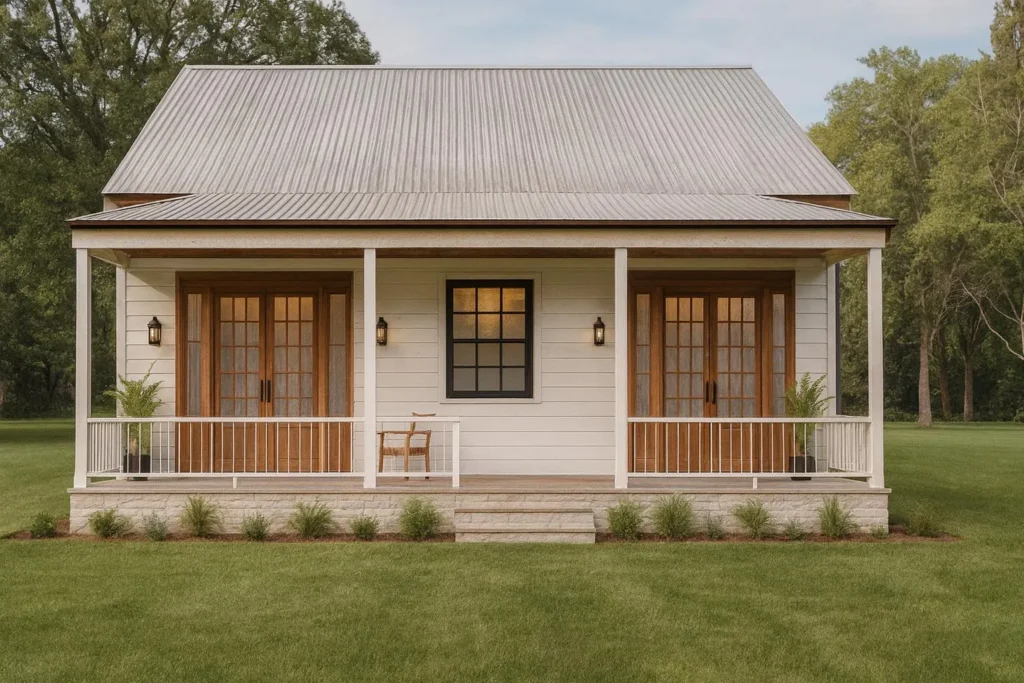
Classic Farmhouse DNA:
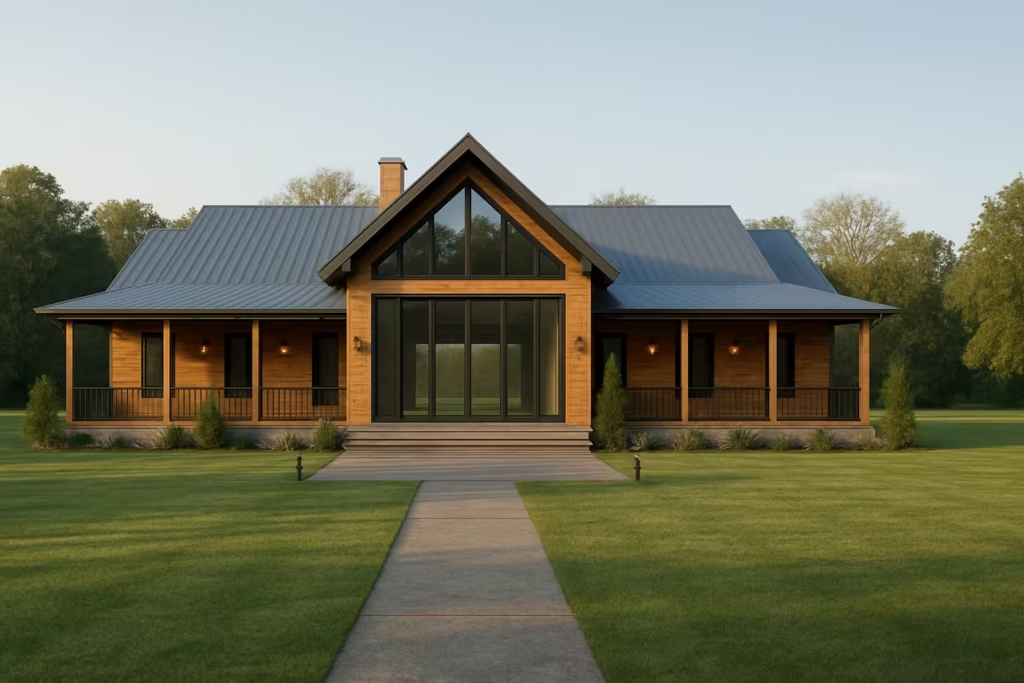
- Pitched gable roofs with functional overhangs
- Symmetrical facades with central entries
- Durable, low-maintenance materials
- Connection between indoor and outdoor spaces
- Practical room layouts designed around daily life
Modern Updates:
- Open-concept living areas (kitchen, dining, living flow together)
- Oversized windows and abundant natural light
- Master suites on the main level (aging-in-place friendly)
- Mudrooms, pantries, and clever storage solutions
- Smart home integration and energy efficiency
Why Americans Can’t Get Enough
According to 2024 housing trend data, modern farmhouse plans consistently rank as the number one requested style among new home buyers. Here’s why:
- Versatility: Works in rural, suburban, and even urban settings
- Functionality: Layouts designed for real life, not just looks
- Curb Appeal: Instantly recognizable, universally appealing
- Customization: Easy to personalize without losing the core aesthetic
- Value Retention: Strong resale value across diverse markets
- Family-Friendly: Layouts that work for every life stage
- Instagram-Worthy: Let’s be honest—these homes photograph beautifully
Popular Modern Farmhouse Floor Plan Sizes
Small Modern Farmhouse Plans (1,200–1,800 sq ft)
Perfect for first-time buyers, empty nesters, or those embracing simpler living without sacrificing style.
Typical Layout:
- 2–3 bedrooms
- 2 bathrooms
- Open kitchen/living/dining area (600–800 sq ft)
- Front porch (150–250 sq ft)
- Optional: small rear deck or patio
Best Features:
- Lower construction and utility costs
- Easier maintenance and cleaning
- Efficient use of every square foot
- Ideal for narrow or smaller lots
- Faster build time (6–10 months)
Popular Configurations:
- 1,200 sq ft: 2-bed, 2-bath cottage style with loft option
- 1,500 sq ft: 3-bed, 2-bath with main-level master
- 1,800 sq ft: 3-bed, 2.5-bath with bonus room over garage
Cost Estimate: $150,000–$280,000 (varies by region and finishes)
Medium Modern Farmhouse Plans (1,800–2,500 sq ft)
The sweet spot for most American families. These plans offer room to grow without feeling overwhelming.
Typical Layout:
- 3–4 bedrooms
- 2.5–3 bathrooms
- Spacious great room (400–500 sq ft)
- Separate dining area
- Large kitchen with island (200–300 sq ft)
- Mudroom and/or walk-in pantry
- Front porch plus rear covered patio
Best Features:
- Separate spaces for living and entertaining
- Room for home offices or playrooms
- Multiple bathrooms reduce morning traffic jams
- Adequate storage throughout
- Accommodates growing families comfortably
Popular Configurations:
- 2,000 sq ft: 3-bed, 2.5-bath with home office nook
- 2,200 sq ft: 4-bed, 2.5-bath with upstairs bonus room
- 2,500 sq ft: 4-bed, 3-bath with main-level guest suite
Cost Estimate: $250,000–$425,000 (depends on location and customization)
Large Modern Farmhouse Plans (2,500–4,000+ sq ft)
Luxury farmhouse living with room for everyone and everything.
Typical Layout:
- 4–6 bedrooms
- 3.5–5 bathrooms
- Expansive open living areas (800–1,200 sq ft)
- Formal dining room
- Chef’s kitchen with walk-in pantry and prep kitchen
- Multiple living areas (keeping room, game room, media room)
- Mudroom with built-in lockers
- Main-level master plus guest suite
- Wraparound or multi-level porches
- 3-car garage
Best Features:
- Multi-generational living capability
- Designated spaces for work, play, and relaxation
- High-end finishes and architectural details
- Room for entertaining large groups
- Luxury amenities (spa bathrooms, wine cellars, craft rooms)
Popular Configurations:
- 3,000 sq ft: 4-bed, 3.5-bath with bonus room and covered lanai
- 3,500 sq ft: 5-bed, 4-bath with separate guest wing
- 4,000+ sq ft: 5-bed, 4.5-bath with finished basement and pool house potential
Cost Estimate: $425,000–$800,000+ (luxury finishes can push higher)
Exterior Design Elements: The Modern Farmhouse Look
Siding & Materials
Board-and-Batten Siding (Most Popular)
Wide vertical boards with narrow battens covering the seams create classic farmhouse texture. Typically painted white, black, or soft gray.
- Pros: Visually striking, hides imperfections, traditional appeal
- Cons: More labor-intensive installation, slightly higher cost
- Cost: $4–$8 per sq ft installed
Horizontal Lap Siding
Traditional clapboard or fiber cement siding in 6–8 inch exposure.
- Pros: Classic look, easier installation, widely available
- Cons: Can feel generic without accent materials
- Cost: $3–$6 per sq ft installed
Mixed Material Approach (Trending in 2025)
Combining board-and-batten with stone, brick, or wood accents.
- Example: White board-and-batten upper level plus natural stone lower level
- Creates visual interest and depth
- Cost varies based on material choices
Roofing
Metal Roofs (Signature Modern Farmhouse)
Standing seam metal roofing in charcoal, black, or weathered gray.
- Pros: 40–70 year lifespan, energy-efficient, low maintenance, classic farmhouse appeal
- Cons: Higher upfront cost, can be noisy in heavy rain (solved with proper insulation)
- Cost: $8–$14 per sq ft installed
Architectural Shingles
High-quality asphalt shingles in dimensional patterns.
- Pros: More affordable, proven performance, easier repairs
- Cons: Shorter lifespan (20–30 years), less distinctive
- Cost: $4–$7 per sq ft installed
Roof Design Elements:
- Steep Pitches: 8:12 to 12:12 slopes create dramatic lines
- Gable Ends: Multiple gables add architectural interest
- Dormers: Functional and decorative, they increase upper-level space
- Overhangs: 18–36 inch eaves provide weather protection and shadow lines
Windows & Doors
Window Styles:
- Black Frame Windows: The modern farmhouse signature (aluminum-clad or vinyl)
- Grid Patterns: 6-over-6, 9-over-9, or farmhouse-style grids
- Sizes: Oversized windows (4×6 ft or larger) maximize natural light
- Placement: Symmetrical on front facade, abundant on rear elevation
Front Doors:
- Styles: Craftsman 5-panel, modern flush doors, or rustic plank doors
- Colors: Black, navy, forest green, or natural wood tones
- Hardware: Matte black or oil-rubbed bronze
- Sidelights: Glass sidelights and transom windows add elegance
French Doors & Sliders:
Large openings (8–16 ft wide) connecting indoor living spaces to porches and patios.
Porches: The Heart of Farmhouse Living
Front Porches:
- Depth: Minimum 8 feet (ideal: 10–12 feet for furniture)
- Width: Full-width or partial (minimum 20 feet)
- Columns: Tapered square columns or simple round posts
- Railings: Simple horizontal rails or classic balusters
- Ceiling: Tongue-and-groove wood or beadboard, painted white or light blue
Wraparound Porches:
Extend along side elevation, adding 400–800 sq ft of outdoor living space.
- Perfect for corner lots
- Creates multiple outdoor “rooms”
- Higher construction cost but massive ROI in lifestyle and resale value
Rear Covered Patios:
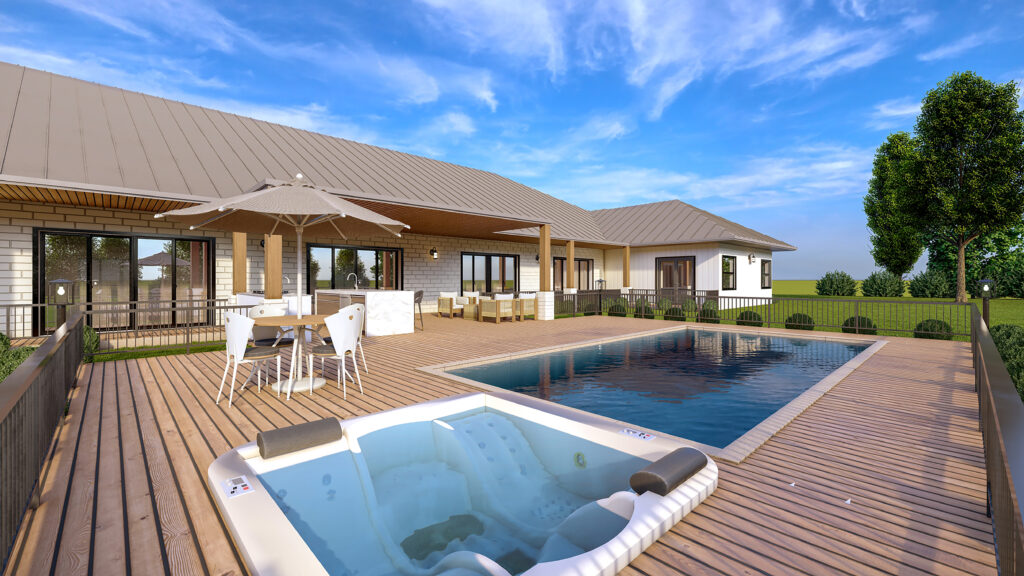
10–16 ft deep, accessible from kitchen/living area, often includes outdoor kitchen prep area.
Color Palettes
Exterior Combinations That Work:
- Classic White Farmhouse
- Body: White or soft white
- Trim: Same or bright white
- Roof: Black or charcoal metal
- Accents: Black windows, natural wood door
- Modern Contrast
- Body: Black or charcoal board-and-batten
- Trim: White
- Roof: Black metal
- Accents: Natural wood or stone
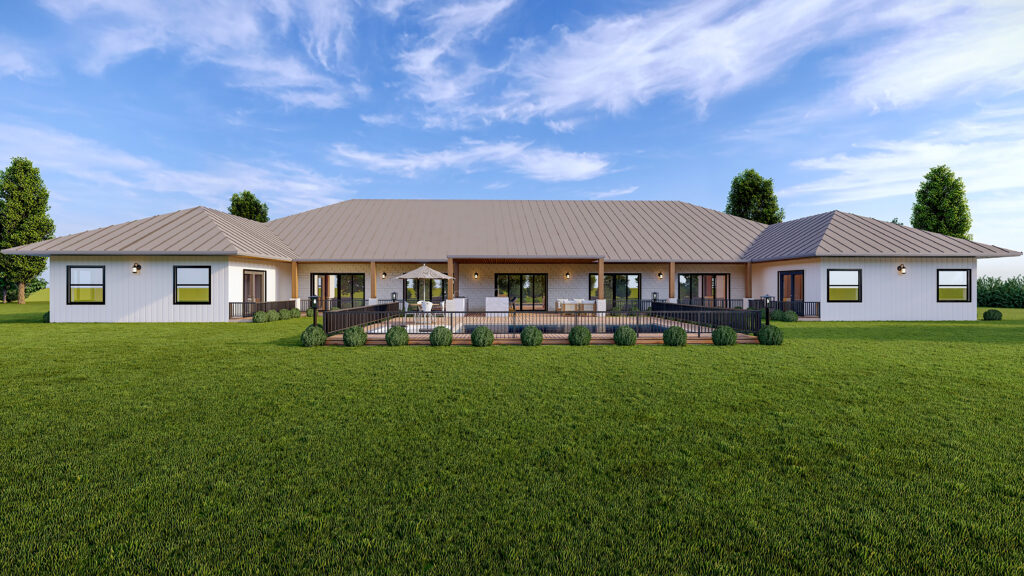
- Warm & Inviting
- Body: Warm gray or greige
- Trim: White
- Roof: Weathered gray metal
- Accents: Natural wood, warm metal fixtures
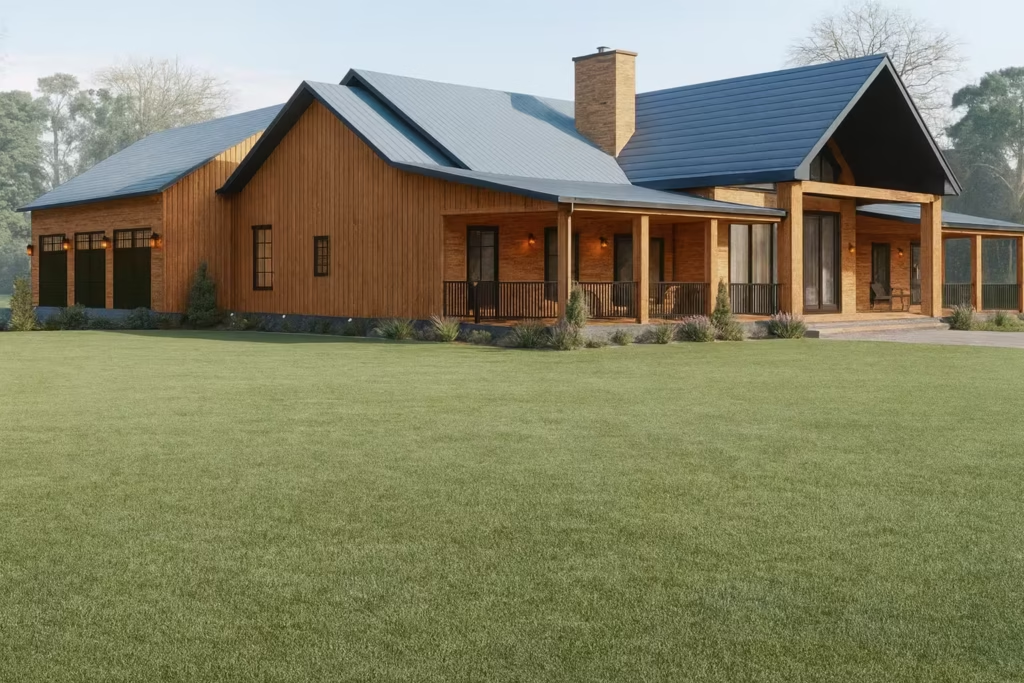
- Regional Farmhouse
- Body: Natural wood siding or stone
- Trim: White or cream
- Roof: Natural metal or dark shingles
- Accents: Black windows, rustic doors
Interior Layout: How Modern Farmhouse Plans Live
Open Concept Living Spaces
The cornerstone of modern farmhouse design is the flowing, open floor plan that connects cooking, dining, and living.
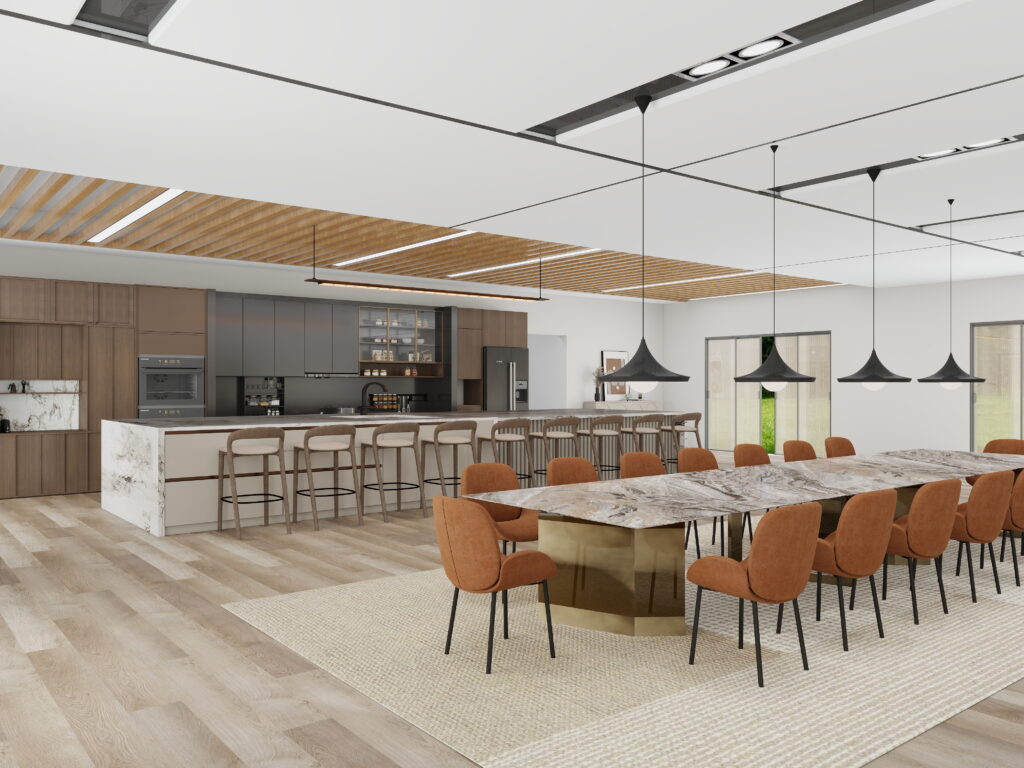
Kitchen/Dining/Living Integration (800–1,200 sq ft combined):
Kitchen Features:
- Island: 8–12 ft long, seating for 4–6
- Layout: L-shape or U-shape with island
- Pantry: Walk-in pantry (6×6 ft minimum) or butler’s pantry
- Appliances: Professional-style range, farmhouse sink, integrated fridge
- Cabinetry: Shaker-style in white, gray, or two-tone (wood lowers, painted uppers)
- Countertops: Quartz, granite, or butcher block
- Backsplash: Subway tile, shiplap, or natural stone
Dining Area:
- Open to kitchen, accommodates 6–10 person table
- Large windows or patio access
- Shiplap accent wall or board-and-batten wainscoting
- Statement lighting (modern farmhouse chandelier or lanterns)
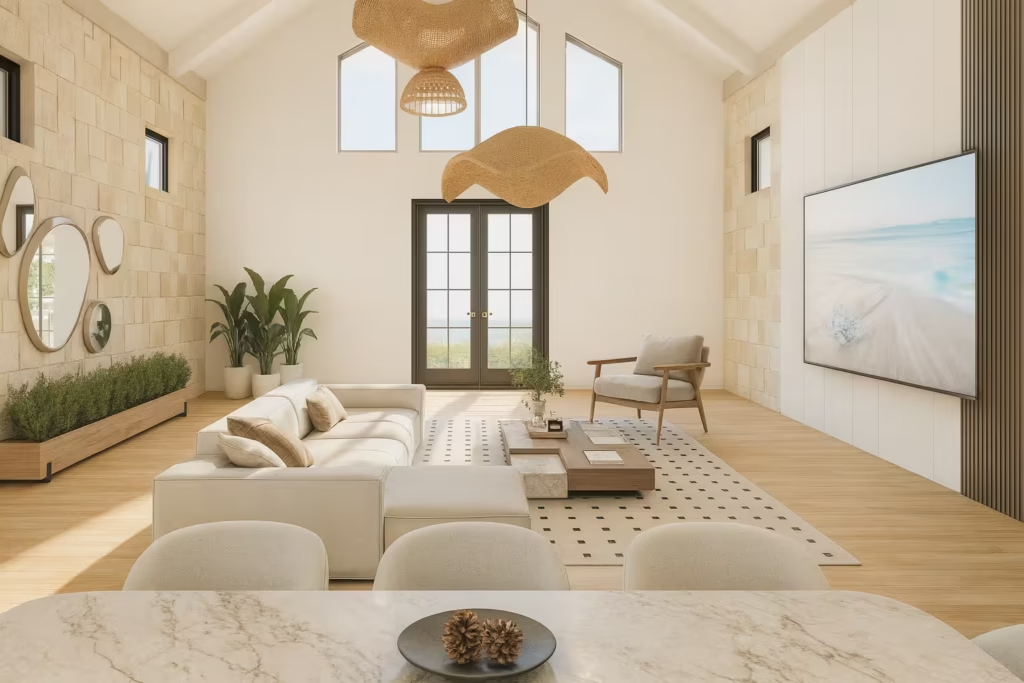
Living Room:
- Size: 16×18 ft to 20×24 ft
- Focal Point: Fireplace with shiplap or stone surround
- Ceiling: Vaulted or coffered ceilings (10–14 ft height)
- Beams: Exposed wood beams (real or faux) add character
- Flooring: Wide-plank hardwood, LVP, or polished concrete
Master Suite: Main-Level Luxury
Modern farmhouse plans prioritize main-level master suites for aging-in-place and convenience.
Bedroom (14×16 ft minimum):
- Tray or vaulted ceiling
- Direct porch or patio access (ideal)
- Walk-in closet (8×8 ft minimum, 10×12 ft preferred)
- Natural light from multiple windows
Master Bathroom (10×12 ft to 14×16 ft):
- Dual Vanity: 6–8 ft long with separate sinks
- Shower: Walk-in, 4×6 ft minimum, curbless entry, tile surround
- Tub: Freestanding soaking tub (trending) or garden tub
- Toilet: Separate water closet for privacy
- Finishes: Marble or marble-look tile, matte black fixtures, shiplap walls
Additional Bedrooms
Secondary Bedrooms (11×12 ft to 13×14 ft):
- Adequate closet space (4–6 ft wide)
- Located upstairs or in separate wing for privacy
- Shared bathroom or Jack-and-Jill configuration
Guest Suite (Optional):
Main-level bedroom with adjacent full bath, perfect for guests or elderly parents.
Functional Spaces That Make Life Easier
Mudroom (8×10 ft minimum):
- Built-in bench with storage below
- Coat hooks or lockers (one per family member)
- Cubbies for shoes and bags
- Access from garage to kitchen
- Tile or luxury vinyl flooring (easy to clean)
Laundry Room (8×8 ft minimum):
- Main-level location (ideally near mudroom)
- Upper and lower cabinets for storage
- Folding counter above machines
- Utility sink
- Room for sorting and hanging clothes
Home Office/Flex Space (10×12 ft):
Essential in 2025 for remote work and homeschooling.
- French doors or barn doors for privacy
- Built-in shelving and desk
- Natural light
- Located off main living area
Bonus Room (300–500 sq ft):
- Upstairs or above garage
- Media room, playroom, craft room, or second living area
- Separate HVAC zone for comfort
Storage Solutions
Modern farmhouse plans excel at integrated storage:
- Walk-in pantries (6×6 ft to 8×10 ft)
- Under-stair storage
- Built-in mudroom lockers
- Linen closets on every bedroom level
- Oversized garage with shelving and workbench space
Space-Saving & Smart Design Solutions
Maximizing Square Footage
Even in smaller modern farmhouse plans, smart design creates the feeling of spaciousness.
Vaulted Ceilings:
In living areas and master bedrooms, vaulted ceilings (12–16 ft at peak) make rooms feel twice their size.
Open Sightlines:
Minimize walls and hallways. Direct views from entry through to rear patio create depth.
Strategic Window Placement:
Large windows on rear elevation, transom windows above doors, corner windows—all bring in light and expand visual space.
Built-In Furniture:
Window seats, banquettes, and built-in shelving save floor space while adding character.
Pocket Doors & Barn Doors:
Save swing space in bathrooms, pantries, and home offices.
Multi-Functional Rooms
Kitchen Island as Command Center:
Not just for meal prep it’s homework station, coffee bar, serving buffet, and gathering spot.
Dining Room Flexibility:
With open layout, dining space serves as overflow seating, craft area, or work-from-home zone.
Flex Rooms:
Plan for a room that can transition: nursery to playroom to teen hangout to guest room to home gym.
Covered Porches as Extra Living:
With ceiling fans, lighting, and comfortable furniture, porches function as additional living rooms 6–9 months of the year in most climates.
Future-Proofing Your Plan
Aging-in-Place Features:
- Main-level master suite (no stairs required for daily living)
- Curbless master shower
- 36-inch doorways (wheelchair accessible)
- Blocking in walls for future grab bars
- Single-story or elevator-ready designs
Expandability:
- Unfinished bonus room or basement (finish as needed)
- Plumbing stubbed for future bathroom additions
- Electrical panel with capacity for additions
- Attic trusses for future storage or living space
Cost Considerations: What You’ll Really Pay
Construction Cost Breakdown
National Averages (2025):
- Basic Build: $100–$150 per sq ft
- Mid-Range Build: $150–$225 per sq ft
- High-End Build: $225–$350+ per sq ft
For a 2,200 sq ft Modern Farmhouse:
- Basic: $220,000–$330,000
- Mid-Range: $330,000–$495,000
- High-End: $495,000–$770,000
What Drives Costs Up?
Site-Related:
- Sloped lots requiring grading or retaining walls
- Well and septic system (add $15,000–$40,000)
- Long driveways or site access challenges
- Tree clearing and land preparation
Design Complexity:
- Complex roof lines (multiple gables, dormers, valleys)
- Stone or brick veneer (add $8–$15 per sq ft)
- Wraparound porches (add $15,000–$50,000)
- Custom windows and doors
- Vaulted ceilings and exposed beams
Interior Finishes:
- Hardwood flooring vs. LVP (difference: $5–$10 per sq ft)
- Quartz vs. granite countertops
- Custom cabinetry vs. semi-custom
- Tile work in multiple bathrooms
- High-end appliances and fixtures
Money-Saving Strategies (Without Sacrificing Style)
Design Phase:
- Simplify the Roofline: Fewer roof planes equals lower framing and roofing costs
- Rectangular Footprint: Square or rectangular homes cost less per sq ft than homes with many corners
- Standard Window Sizes: Custom windows cost 2–3x more than stock sizes
- Smart Square Footage: Build 2,000 sq ft well rather than 2,500 sq ft cheaply
Construction Phase:
- Owner-Builder Tasks: Install light fixtures, paint, and landscaping yourself
- Leave Bonus Room Unfinished: Finish it in 2–5 years when budget allows
- Standard Materials with Custom Touches: Use builder-grade cabinets but add custom hardware
- Regional Material Sources: Source stone, wood, and brick locally
Timing:
- Build in Off-Season: Late fall and winter often see lower contractor rates
- Bundle Services: Use the same contractor for multiple trades when possible
Regional Variations: Modern Farmhouse Across America
Modern farmhouse style adapts beautifully to regional climates, materials, and traditions.
Southern Modern Farmhouse
Key Features:
- Wide porches (front and rear) for outdoor living
- Higher ceilings (10–12 ft on main level) for heat management
- Metal roofs (heat-reflective)
- Larger overhangs for sun and rain protection
- Outdoor kitchens and living spaces
- Brick or stone lower levels with board-and-batten upper
Popular States: Texas, Tennessee, Alabama, Georgia, North Carolina
Color Palettes: Crisp white with black accents, or warm grays with natural wood
Midwest Modern Farmhouse
Key Features:
- Steeper roof pitches (for snow load)
- Covered entries and mudrooms (weather protection)
- Bonus rooms over garages (common)
- Basements (finished or unfinished)
- Four-season porches or sunrooms
- Mix of siding materials (stone, board-and-batten, lap siding)
Popular States: Ohio, Indiana, Illinois, Wisconsin, Minnesota
Color Palettes: Warm neutrals, natural wood tones, darker roofs
Western/Mountain Modern Farmhouse
Key Features:
- Heavy timber accents and exposed beams
- Natural stone (river rock, stacked stone)
- Larger windows (mountain or valley views)
- Great rooms with floor-to-ceiling stone fireplaces
- Covered decks and patios at multiple levels
- Metal or cedar shake roofs
Popular States: Colorado, Montana, Idaho, Utah
Color Palettes: Natural wood, stone gray, charcoal, forest green
Northeast Modern Farmhouse
Key Features:
- Traditional New England farmhouse proportions
- Symmetrical facades
- Central chimney designs
- Smaller windows (energy efficiency)
- Mudrooms and entryways designed for winter gear
- Attached barns or carriage houses
Popular States: Vermont, Maine, New Hampshire, upstate New York
Color Palettes: Classic white, barn red accents, black trim
Customization Options: Make It Yours
Floor Plan Modifications
Common Customizations:
- Flip the Plan: Mirror image for site orientation or views
- Garage Position: Change from side-load to front-load (or vice versa)
- Bedroom Swaps: Convert office to bedroom, or bonus room to 5th bedroom
- Porch Extensions: Add square footage to front or rear porches
- Basement Addition: Add full or partial basement to stock plan
Cost of Modifications:
- Minor tweaks (moving doors, windows): $500–$2,000
- Moderate changes (room size adjustments): $2,000–$5,000
- Major overhauls (footprint changes, structural): $5,000–$15,000+
Popular Add-Ons
Outdoor Living:
- Outdoor kitchens (grill station, sink, storage): $8,000–$30,000
- Screened porches (convert open porch): $5,000–$15,000
- Pool house or cabana: $40,000–$150,000
- Detached garage or workshop: $30,000–$80,000
Interior Upgrades:
- Home theater or media room: $10,000–$50,000
- Wine cellar or bar area: $8,000–$40,000
- Craft room or hobby space: $5,000–$20,000
- Spa bathroom (steam shower, sauna): $15,000–$60,000
Sustainable & Energy-Efficient Options
Solar Ready:
- Roof orientation and pitch optimized for panels
- Electrical panel with capacity for solar integration
- Cost: Design consideration (minimal), Solar installation: $15,000–$40,000
Geothermal HVAC:
- Ground-source heat pump system
- 40–60% reduction in heating/cooling costs
- Cost: $20,000–$40,000 (but pays for itself in 5–10 years)
High-Performance Building Envelope:
- Spray foam insulation
- Triple-pane windows
- Air sealing and thermal bridging elimination
- Cost addition: $8,000–$20,000 (but reduces utility bills 30–50%)
Rainwater Collection:
- Gutters to cisterns for irrigation
- Cost: $2,000–$8,000
Comparing Modern Farmhouse to Other Popular Styles
Modern Farmhouse vs. Craftsman
Similarities:
- Functional floor plans
- Quality materials and craftsmanship
- Strong curb appeal
- Porches and outdoor living
Differences:
- Craftsman: More decorative trim, tapered columns, built-in furniture, darker wood tones
- Modern Farmhouse: Cleaner lines, simpler trim, lighter color palettes, more open interior
- Cost: Similar (Craftsman may cost slightly more due to trim details)
Best For:
- Craftsman: Those who love traditional architectural details
- Modern Farmhouse: Those seeking timeless simplicity with modern function
Modern Farmhouse vs. Colonial
Similarities:
- Symmetrical facades
- Central entryways
- Classic proportions
Differences:
- Colonial: Formal room layouts, centered stairs, traditional materials
- Modern Farmhouse: Open floor plans, casual living, mixed materials
- Cost: Colonial may cost more (more rooms, formal spaces)
Best For:
- Colonial: Families preferring formal entertaining and traditional layouts
- Modern Farmhouse: Families wanting casual, flexible living spaces
Modern Farmhouse vs. Ranch
Similarities:
- Single-story options
- Horizontal orientation
- Indoor-outdoor connection
Differences:
- Ranch: Lower rooflines, long hallways, smaller windows
- Modern Farmhouse: Dramatic rooflines, open layouts, abundant natural light
- Cost: Similar for same square footage
Best For:
- Ranch: Budget-conscious, prefer lower maintenance
- Modern Farmhouse: Willing to invest in architectural character
Choosing the Right Modern Farmhouse Plan
Assess Your Needs
Lifestyle Questions:
- How many bedrooms do you need now? In 5 years? In 10 years?
- Do you entertain frequently? Need formal spaces or casual is fine?
- Work from home? Need dedicated office?
- Hobbies requiring space? (workshop, craft room, gym)
- Aging parents or multi-generational living?
Lot Considerations:
- Lot size and shape (narrow, wide, corner, cul-de-sac)
- Topography (flat, sloped, heavily wooded)
- Views to maximize (rear, side, front)
- HOA restrictions (setbacks, height limits, exterior colors)
- Sun orientation (southern exposure for porches)
Budget Reality Check:
- Maximum construction budget (include 10–15% contingency)
- Land costs
- Landscaping and driveway
- Well/septic or utility connection fees
- Furniture and window treatments
Working with Designers & Builders
Plan Sources:
- Stock Plans ($800–$3,000): Pre-designed, ready to build, minimal customization
- Modified Stock Plans ($3,000–$8,000): Stock plan with your customizations
- Semi-Custom ($8,000–$20,000): Architect works within parameters of existing designs
- Fully Custom ($20,000–$100,000+): Designed from scratch for your exact vision
Builder Selection:
- Get 3–5 bids (detailed line-item estimates)
- Check licenses, insurance, references
- Visit previous builds (similar style)
- Understand warranty and what’s included
- Communication style match (you’ll work together for months)
Timeline Expectations
Planning Phase (2–6 months):
- Select or design plan
- Secure financing pre-approval
- Finalize lot purchase
- Submit for permits
Permit Phase (1–4 months):
Varies greatly by jurisdiction.
Construction Phase (6–12 months):
- Foundation: 2–4 weeks
- Framing: 4–8 weeks
- Mechanicals (electric, plumbing, HVAC): 4–6 weeks
- Insulation and drywall: 4–6 weeks
- Interior finishes: 8–12 weeks
- Exterior finishes: 6–10 weeks (can overlap with interior)
Total Timeline: 12–24 months from initial planning to move-in (average: 16 months)
Modern Farmhouse on Pinterest & Instagram
Modern farmhouse style dominates social media for good reason—it photographs beautifully and inspires millions.
Most Popular Design Elements on Social Media
- Shiplap Walls (10.2M pins on Pinterest)
- Farmhouse Kitchens (8.7M pins)
- Board-and-Batten Exteriors (6.4M pins)
- Barn Doors (5.8M pins)
- Freestanding Tubs (4.9M pins)
Creating Your Dream Board
Search Terms That Work:
- “Modern farmhouse floor plan”
- “1500 sq ft modern farmhouse”
- “Black and white farmhouse exterior”
- “Open concept farmhouse kitchen”
- “Farmhouse master bathroom”
- “Front porch farmhouse ideas”
Follow These Accounts (Instagram):
- @modernfarmhouseplans
- @farmhousemovement
- @cottonstemandstem
- @magnolia (Joanna Gaines)
- @southernliving
- @housebeautiful
Visual Features That Increase Engagement
Exterior Shots:
- Golden hour lighting (sunrise/sunset)
- White houses with black trim
- Wraparound porches with rocking chairs
- Metal roofs catching light
- Symmetrical compositions
Interior Shots:
- Wide-angle of open kitchen/living
- Freestanding tubs with window views
- Shiplap accent walls
- Exposed wood beams
- Cozy living rooms with fireplaces
Frequently Asked Questions
What is the average cost to build a modern farmhouse?
For a 2,000–2,500 sq ft modern farmhouse, expect to pay $300,000–$500,000 including land, depending on your region. Costs break down to roughly $150–$200 per sq ft for mid-range finishes. High-end builds in expensive markets can exceed $300 per sq ft. The most cost-effective approach is choosing a simple rectangular footprint, standard roof pitch, and strategic use of premium materials only where they make the biggest visual impact.
Are modern farmhouse plans energy efficient?
Yes, when built with modern construction techniques. Most modern farmhouse plans incorporate open layouts that improve air circulation, reducing HVAC demands. Metal roofs reflect heat, lowering cooling costs by 10–25%. Large windows require high-performance glazing (Low-E, argon-filled) to maintain efficiency. Adding spray foam insulation, LED lighting, and Energy Star appliances typically results in 30–40% lower utility bills compared to older homes of similar size.
Can I build a modern farmhouse in a suburban neighborhood?
Absolutely. Modern farmhouse style works beautifully in suburban settings on standard lots (0.25–1 acre). The key is scaling appropriately a 2,200 sq ft farmhouse on a 0.3-acre lot fits perfectly, while a 4,000 sq ft version would feel oversized. Check HOA restrictions on exterior colors, materials, and outbuildings. Most subdivisions welcome farmhouse style as it maintains strong curb appeal and property values.
Do I need a large lot for a modern farmhouse plan?
Not necessarily. While farmhouses feel at home on 2–5 acre parcels, compact farmhouse plans (1,500–2,000 sq ft) work well on standard suburban lots (0.25–0.5 acres). The essential farmhouse elements—front porch, pitched roof, board-and-batten siding—translate beautifully to smaller footprints. You may need to forgo wraparound porches or detached barns, but the core aesthetic remains intact.
What’s the difference between modern farmhouse and farmhouse style?
Traditional Farmhouse: Authentic working farmhouses built 1850–1950, featuring practical layouts, separate rooms, smaller windows, wood siding, and rustic details. Modern Farmhouse: Contemporary homes inspired by farmhouse aesthetics but updated with open floor plans, oversized windows, modern kitchens, luxury bathrooms, and current building codes. Think of it as farmhouse “inspired” rather than farmhouse “replica”—the best of both eras combined.
How long do modern farmhouse plans take to build?
From breaking ground to move-in, expect 8–14 months for most modern farmhouse builds. Timeline factors include: Size (larger equals longer), complexity (simple rooflines build faster), weather delays (2–6 weeks in most regions), material availability (supply chain issues can add weeks), and customization level (stock plans build faster than heavily modified plans). Finishing a basement or bonus room after move-in can shave 1–2 months off initial construction time.
Can I modify a stock modern farmhouse plan?
Yes, most stock plans can be modified. Common changes include flipping the layout, adjusting room sizes, adding or removing bedrooms, changing garage configurations, and extending porches. Minor modifications cost $500–$2,000. Moderate changes (moving walls, adding square footage) run $2,000–$5,000. Major redesigns requiring structural engineer review can reach $5,000–$15,000. Always verify modifications with a local architect or engineer to ensure code compliance.
What are the best flooring options for modern farmhouse homes?
The top three choices are:
- Wide-Plank Hardwood (7–10 inch planks): Most authentic, beautiful patina, higher cost ($8–$15 per sq ft installed). Best for living areas, bedrooms.
- Luxury Vinyl Plank (LVP): Waterproof, durable, affordable ($3–$6 per sq ft), looks remarkably like wood. Best for kitchens, bathrooms, mudrooms, basements.
- Polished Concrete: Modern farmhouse twist, durable, low-maintenance, cost-effective ($5–$10 per sq ft). Best for open living areas in contemporary farmhouse builds.
Many homeowners mix materials—hardwood in main living areas, LVP in wet areas, and tile in bathrooms.
Do modern farmhouse homes have good resale value?
Excellent question. Modern farmhouse homes consistently show 85–95% return on investment when resold within 5–10 years of construction in suburban and rural markets. The style’s timeless appeal, functional layouts, and broad buyer demographic (first-time buyers to retirees) create strong demand. However, extremely customized or oversized farmhouses in areas with lower price points may see slower appreciation. The sweet spot for resale is 2,000–2,800 sq ft with 3–4 bedrooms and main-level master.
What’s the best foundation type for modern farmhouse plans?
Depends on your region and budget:
- Slab Foundation ($5–$8 per sq ft): Best for flat lots in warm climates, fastest installation, no basement option.
- Crawl Space ($6–$10 per sq ft): Common in South and coastal areas, allows for HVAC and plumbing access, moderate cost.
- Full Basement ($15–$30 per sq ft): Standard in Midwest and Northeast, doubles living space potential, highest cost but best ROI if finished.
Modern farmhouse plans adapt to any foundation type. In flood-prone areas, pier or raised foundations work beautifully with farmhouse aesthetics.
Conclusion: Your Modern Farmhouse Journey Starts Here
Modern farmhouse plans represent more than just a housing trend—they’re a return to homes that prioritize livability, beauty, and lasting value. Whether you’re drawn to the crisp white exteriors and black trim, the warmth of wide-open living spaces, or the charm of front porches perfect for morning coffee, there’s a modern farmhouse plan that fits your vision, budget, and lifestyle.
Key takeaways to remember: Choose the right size—don’t overbuild for your lot or lifestyle (1,800–2,500 sq ft is the sweet spot for most families). Invest wisely by putting money into quality materials where they count: roof, windows, and kitchen. Plan for the future with main-level master suites and flexible spaces that ensure your home works for decades. Customize thoughtfully by modifying stock plans to save money while getting the features you need most. And work with professionals—experienced builders and architects ensure your farmhouse dreams become reality without costly mistakes.
Ready to start your modern farmhouse journey? Begin by browsing plan collections, creating Pinterest boards, and calculating realistic budgets. Connect with local builders who specialize in farmhouse construction—seeing completed projects in person will help you envision your own home. And remember, the best modern farmhouse plan isn’t the biggest or fanciest—it’s the one that perfectly fits your family’s needs today and adapts as those needs evolve tomorrow.
Your dream modern farmhouse is waiting. Let’s build it together.